Spoken Word Poetry
Showing posts with label Poems. Show all posts

Friday, 30 December 2016

Poetry Book of the Year

When I last wrote here it was to say that this site was closing for business in the light of what appeared apathetic disinterest. Perhaps that was disingenuous of me. I'd like to think I got it wrong and that there are poets out there who believe in reading their work aloud. I hope so. I sincerely would like to see this site brought alive again with an influx of spoken word poetry.

When I last wrote here it was December 2015. I apologised that I had not written or rather posted, as I had in previous years, 'Something For The Weekend, Sir's' Poetry Book of the Year. Well, this year I have.

"Falling Awake" by Alice Oswald 


. . All poems are copyright of the poet. Permission for this poet to post his/her work here has been granted by blog owner. All rights remain with the individual poet and their respective publisher.

Saturday, 26 December 2015

Poetry Book of the Year

This time last year, filled with passion and hope following the wonderful slew of spoken word poetry that appeared here On Something For The Weekend, Sir? I had the audacity to write the following piece....

http://fishyfarts.blogspot.co.uk/2014/12/poetry-book-of-year-2014-bone-monkey-by.html

Sadly this year, due to three different sets of circumstances the enthusiasm I had at that point has not so much gone as been pushed aside for awhile.

1.The incredible poets who recorded their work have not been followed by others.
2. My intention to keep this site alive by recording my own feeble efforts was thwarted when my PC was hacked preventing me from filming myself.
3. I am currently recovering from another minor stroke and find it hard to type when seeing double ('Tis a bugger and no mistake)

Hopefully, all will be back soon and firing on all cylinders.

If any of the poets who have posted here would like to recommend a book of poetry as this years favoured one, please go ahead and do so!

Friday, 7 August 2015

Ten Reasons Why You Might Enjoy The World’s Wife - A personal view by Roger Stevens


The World’s Wife (Picador 1999) was Carol Ann Duffy’s first themed collection of poems, dealing with sexism, equality, bereavement and birth. The collection looks at important events and history – from a female perspective and often in a controversial way. She tells the wives’ stories.
1 If you are new to the poems of Carol Ann Duffy I would suggest this book as a good place to start, to find out why she is such a loved and respected poet; or if you are already familiar with her work – come here to rediscover her or just delight, once again, in these wonderful narratives.
2 To enjoy her wit and humour. Her poem Frau Freud could almost have been written by Monty Python, or appeared in Viz, with its exhausting list of names for the male member. And in Mrs Darwin…

Went to the zoo/ I said to Him/
Something about that chimpanzee reminds me of you.
3 To enjoy the exactness and rightness of her phrases.
In The Devil’s Wife - A faint sneer of thunder… In Mrs Quasimodo - the murdered music of the bells… and in Mrs Aesop – that the bird in his hand shat on his sleeve.
4 To discover the real reason why Delilah cut Samson’s hair. An act of love and kindness.
5 To spare a thought for the dilemma of Mrs Midas. The need to put a chair against her door, petrified…
4 Her cunning, clever and sometimes unexpected use of rhyme. As Mrs Winkle returns home with a pastel of Niagara to find Rip Van Winkle rattling a bottle of Viagra
5 Her poetry is honest. Even brutal. If she has something to say, she doesn’t hold back, as in the explicit Mrs Quasimodo.
When the others left,
He fucked me underneath the gaping, stricken bells
until I wept


6 For the rhythm of her lines, the rise and fall, the cadences, that propel her tales, the dash, the joie de vivre.
7 Carol Ann Duffy’s feminism underpins this collection. She has said that in order to find the truth, the female character has to be dominant. In the opening poem, Little Red Cap, she found that the original fairy tale, upon which this is based, was an example of feminism in both fairy tale and English literature. She then found a personal connection within the original story line to help form the dominant female character.
You might ask why. Here’s why. Poetry.
The wolf, I knew, would lead me deep into the woods,
away from home, to a dark tangled thorny place
lit by the eyes of owls.
8 The way she uses these tales to highlight men’s treatment of women. In Pygmalion’s Bride, for example, the tale of a Cypriot sculptor who carved a woman out of ivory, she cleverly finds a modern equivalent. The sort of man that many women know too well.
9 And who wouldn’t want to read about a female Pope…
10 Or a song about Elvis’s Twin Sister who lives in a convent…
I think of it
as Graceland here,
a land of grace
…and prays for the immortal soul of rock and roll.
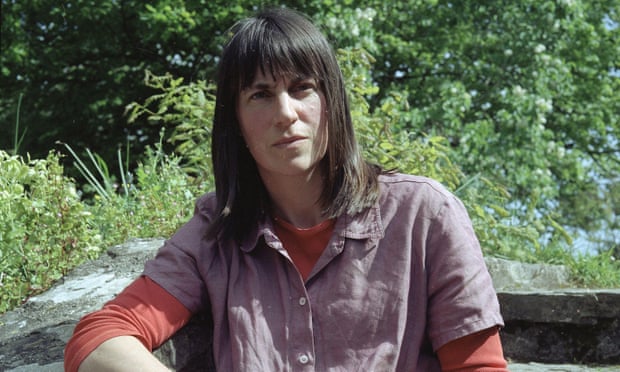


Friday, 24 July 2015

Ten Reasons Why You Might Enjoy The Book of Shadows by Don Paterson A personal view by Roger Stevens


Don Paterson was born in Dundee, Scotland, in 1963. He has won more awards and prizes for his poetry than you can shake a stanza at. He has also published three books of aphorisms, of which The Book of Shadows is one.

1 Who wouldn’t want a book of aphorisms on their bookshelf? And this collection, by one of Britain’s finest poets is a beauty.

2 An aphorism is a terse saying, expressing a general truth, principle, or astute observation, and spoken or written in a laconic and memorable form. And what a great feeling when you read an aphorism and it speaks to you.

3 Aphorisms can be very short and witty.

If I try to write anything longer than a single sentence, I find myself just making things up.

5 Aphorisms can be long and chewy.

Poetry is a mode of reading, not of writing. We can read a poem into anything. A poet is someone skilled in manipulating that innate human capacity to make things sign. They advertise the significance of the form in its shape or speech, build in enough strangeness and intrigue to have the reader read in, enough familiarity not to repel them, and calculate enough reward for their effort. But so much poetry now is all advertisement, or all familiarity, or all strangeness, or all calculation.

7 This is a great book for dipping into. Like a botanist in a boat travelling through the coral reefs.

Almost everything in the room will survive you. To the room, you are already a ghost, a pathetic soft thing, coming and going.

9 If you enjoy poetry but are looking for something a little different… this is a word from the wise.

10 Falling and flying are near-identical sensations, in all but one final detail. We should remember this when we see those men and women seemingly in love with their own decline.

Aphorisms in italics are taken from The Book of Shadows.


Friday, 10 July 2015

Ten Reasons Why… You Might Enjoy Poems on the Underground A personal view by Roger Stevens


If you’ve ever travelled on London’s Underground you will have noticed that, every now and then, between the adverts for mints and temps, there is a poem. It all began back in 1986 as an idea shared among a few friends, Gerard Benson, Judith Chernaik and Cicely Herbert. Wouldn’t it be a great idea, they thought, to fill the blank grey advertising slots with poems, for the public to read, think about and enjoy. London Underground liked the idea. And now, thirty years later, they have become a wonderful part of the tube journey. They provide a distraction from the crowded carriage. Sometimes they lift the spirits. They make the journey more bearable. There are several Poems on the Underground books – but here are the beginnings of ten poems showing why you might enjoy them, from the Penguin edition of 2012, published to mark London Underground’s 150th anniversary. And a little quiz – Can you name the authors of these poems? Answers below.
1
How do I love thee? Let me count the ways
I love thee to the depth and breadth and height
My soul can reach…
2
I met a traveller from an antique land
Who said: Two vast and trunkless legs of stone
Stand in the desert…
3
In London/ every now and then/ I get this craving/ for my mother’s food
I leave art galleries/ in search of plantains/ saltfish/ sweet potatoes…
4
I have known the inexorable sadness of pencils,
neat in their boxes, dolor of pad and paperweight,
All the misery of manila folders…
5
Somewhere on the other side of this wide night
and the distance between us, I am thinking of you.
The room is turning slowly away from the moon…
6
The trees are coming into leaf/ Like something almost being said
The recent buds relax and spread/ Their greenness is a kind of grief
7
Earth has not anything to show more fair:
Dull would he be of soul who could pass by
A sight so touching in its majesty…
8
English Teeth, English Teeth/ Shining in the sun
A part of British heritage/ Aye, each and every one
9
Aunt Jennifer's tigers prance across a screen
Bright topaz denizens of a world of green…
10
The highway is full of big cars/ going nowhere fast
And folks is smoking anything that’ll burn
Some people wrap their lives around a cocktail glass
And you sit wondering/ where you’re going to turn
I got it./ Come. And be my baby…


1 Elizabeth Barrett Browning 2 Percy Bysshe Shelley 3 Grace Nichols 4 Theodore Roethke 5 Carol Ann Duffy
6 Philip Larkin 7 William Wordsworth 8 Spike Milligan 9 Adrienne Rich 10 Maya Angelou

Friday, 26 June 2015

Ten Reasons Why… You Might Enjoy the Poems of Carl Sandburg A personal view by Roger Stevens


Carl August Sandburg (1878 -1967) was an American poet, writer and editor who won three Pulitzer Prizes, two for his poetry and one for his biography of Abraham Lincoln.  During his lifetime, Sandburg was widely regarded as a major figure in contemporary literature, especially for volumes of his collected verse, including Chicago Poems (1916), Cornhuskers (1918), and Smoke and Steel (1920)
1 Carl Sandberg was a journalist and a socialist, and had a keen sense of and desire for social and economic justice, which was reflected in many of his poems. Despite being written so long ago his poems still resonate with us today.
2
A man is a man and what can you do with him?
but a machine, now you take a machine
no kids  no woman  never hungry  never thirsty
all a machine needs is a little regular attention
and plenty of grease
3 Sandburg wrote, “Here is the difference between Dante, Milton and me. They wrote about hell and never saw the place. I wrote about Chicago after looking the town over for years and years.”
4 Trafficker
Among the shadows where two streets cross,
A woman lurks in the dark and waits
To move on when a policeman heaves in view.
Smiling a broken smile from a face
Painted over haggard bones and desperate eyes…
5 He was not afraid to tackle the inequities of organised religion.

You tell people living in shanties Jesus is going to fix it up all right with them by giving them mansions in the skies after they’re dead and the worms have eaten ‘em.
6 Grass
Pile the bodies high at Austerlitz and Waterloo.
Shovel them under and let me work -
I am the grass; I cover all.
7 He wrote many, wonderful love poems. He asks of love,
“Is it a cat with claws and wild mate screams in the black night?”
8
Your white shoulders
I remember
And your shrug of laughter
Low laughter
Shaken slow
From your white shoulders
9 He was one of the first great poets to use free verse. Critics didn’t like it, especially in the early days, calling it un-aesthetic and unpoetic. It doesn’t seem in any way unusual now, but at the time it caused quite a stink in poetic circles. And as well as tackling traditional poetic subjects, he liked to write about every day, mundane things. And popular culture. Pre-shadowing the Beat Poets.
10 Lines written for Gene Kelly to Dance To

Tell your feet the alphabet
Tell your feet the multiplication table
Tell your feet where to go, and watch ‘em go and come back...

Wednesday, 31 December 2014

Poetry Book of the Year - 2014 - 'Bone Monkey' by Janet Sutherland


Janet Sutherland - Bone Monkey
 
 
The first mistake I made with this highly creative book was to assume, upon seeing the title, that the subject matter had a Pagan slant. Nothing wrong if that were the case. It isn't though. It is far more than that and although the central character is a Loki like, Puckish deity, one who flits in and out of mortal life, the poems featured here have more to do with humankinds spectrum of frailties. From murder to sex, from death and rejuvenation to caring for a dementia sufferer.

Like any book of poetry, unlike a novel, reading it from cover to cover, poem by poem, is never near enough to grasp all of what's been said. I read this through in just over one day. I then returned to it again for the next few weeks. Re-reading and fully digesting each jewel like word.
 
With my woefully inadequate education, one that saw me being expelled following some riotous behaviour, I wouldn't know a sonnet from a punnet. Okay, one has rich delicious fruit in it and is eaten by attendees of Wimbledon. The other is something poets do and that Will Shakespeare was famous for. In this book we find those sonnets nuzzling up against free form poetry. The range is expansive, the emotions found - expressive.
 
 Janet's spritely dance leads us down paths dark, dim yet often exhilarating. Her poetry is sure footed and nimble, weaving as it touches upon a series of linked ambitions, threaded conceits, one central theme  revealing what we already know - mankind is an odd lot.

There are several poems that really thrilled me - 'Red Hibiscus' with its twisted psyche. Bone Monkey being as devious and deviant as a Bone Monkey can be. 'His Exposition on the art of memory,' which carries a distinct melancholic feel to it and finally 'Fire Fleet and Candle Light' an ode to death, dying and the ultimate end of life.

It is the delight in the words that both mesmerise and impress. The sheer exuberant zest for the poetry's spectrum as the colours cast engage the reader, tugging you close, inviting you to feel those rhythm's, urging you to uncover meaning but most important of all to enjoy what in reality is some fine poetry. 

 
Janet Sutherland was born in Salisbury and grew up on a small dairy farm. She studied English at University College, Cardiff, before moving on to gain an MA in American Poetry at University of Essex.  Since 2001, she’s lived in Lewes, East Sussex and as well as pursuing her writing, Janet works part time for Relate in Brighton.

Wednesday, 12 September 2012

David Caddy

The image below is from the cover of a book  published this time last year, 2011, by Shearsman Books. The publication is a volume of poetry written by David Caddy. The text below the cover artwork is from the publishers website...
 
 
David Caddy is a poet and critic from the Blackmore Vale in north Dorset. He was educated as a literary sociologist at the University of Essex. He founded and organised the East Street Poets, the UK's largest rural poetry group from 1985 to 2001. He directed the legendary Wessex Poetry Festival from 1995 to 2001, and later the Tears in the Fence festival from 2003 to 2005. He has edited the independent and eclectic literary magazine, Tears in the Fence, since 1984. He co-wrote a literary companion to London in 2006, has written and edited drama scripts and podcasts, and regularly contributes essays, articles and reviews to books and journals.

 
An angry young man, growing older but still furious with the way the English countryside is being used, abused and wantonly neglected. Take a walk down your local book shop, Waterstones no doubt, and browse then buy this excellent book.
 
 
.
.
.
yEt aNOtHEr sMArT aRSe IN ThE mAGpIE mEMOrY cOlLeCtiVe.

Tuesday, 16 November 2010

Poetry By Inches, Words By a Mile - T.S.Elliot


The Hollow Men
A penny for the old guy


I

We are the hollow men
We are the stuffed men
Leaning together
Headpeice filled with straw. Alas!
Our dried voices, when
We whisper together
Are quiet and meaningless
As wind in dry grass
Or rats' feet over broken glass
In our dry cellar
Shape without form, shade without colour,
Paralysed force, gesture without motion;
Those who have crossed
With direct eyes, to death's other Kingdom
Remember us - if at all - not as lost
Violent souls, but only
As the hollow men
The stuffed men.

II

Eyes I dare not meet in dreams
In death's dream kingdom
These do not appear:
There, the eyes are
Sunlight on a broken column
There, is a tree swinging
And voices are
In the wind's singing
More distant and more solemn
Than a fading star.
Let me be no nearer
In death's dream kingdom
Let me also wear
Such deliberate disguises
Rat's coat, crowskin, crossed staves
In a field
Behaving as the wind behaves
No nearer --
Not that final meeting
In the twilight kingdom

III

This is the dead land
This is cactus land
Here the stone images
Are raised, here they receive
The supplication
of a dead man's hand
Under the twinkle of a fading star.
Is it like this
In death's other kingdom
Walking alone
At the hour when we are
Trembling with tenderness
Lips that would kiss
Form prayers to broken stone.

IV

The eyes are not here
There are no eyes here
In this valley of dying stars
In this hollow valley
This broken jaw of our lost kingdoms
In this last of meeting places
We grope together
And avoid speech
Gathered on this beach of the tumid river
Sightless, unless
The eyes reappear
As the perpetual star
Multifoliate rose
Of death's twilight kingdom
The hope only
Of empty men.

V


Here we go round the prickly pear
Prickly pear prickly pear
Here we go round the prickly pear
At five o'clock in the morning.
Between the idea
And the reality
Between the motion
And the act
Falls the Shadow

For Thine is the Kingdom
Between the conception
And the creation
Between the emotion
And the response
Falls the Shadow
Life is very long
Between the desire
And the spasm
Between the potency
And the existence
Between the essence
And the descent
Falls the Shadow

For Thine is the Kingdom
For Thine is
Life is
For Thine is the
This is the way the world ends
Not with a bang but a whimper.
by
TS Elliot


.
.
.
aNOtHEr dIp INtO ThE mAGpIE mEMOrY pOOoL.

Thursday, 4 February 2010

Poetry by Inches, Words by a Mile - Philip Larkin


They fuck you up, your mum and dad.
They may not mean to, but they do.
They fill you with the faults they had
And add some extra, just for you.

But they were fucked up in their turn
By fools in old-style hats and coats,
Who half the time were soppy-stern
And half at one another's throats.

Man hands on misery to man.
It deepens like a coastal shelf.
Get out as early as you can,
And don't have any kids yourself.


.
.
.
aNOtHEr dIp INtO ThE mAGpIE mEMOrY pOOoL.


Thursday, 10 December 2009

The Mersey Sound


At secondary school we studied Chaucer, Wordsworth and Byron. I enjoyed poetry – and we had a brilliant English teacher – Mr Nichols. (His nickname was Old Nick and he did have a whiff of sulphur about him.) And then, in 1967, this book came out and it changed my life. I know – that’s a cliché and a bit glib. But it’s true. I was in a band, and a massive Beatles fan. This was the poetic equivalent of the Beatles. Funny, serious, melancholic, relevant – about girlfriends, supermarkets, fish and chips and the nuclear holocaust that we all felt sure was on the way – accessible and with none of the pretentiousness of other modern poetry. No wonder it went on to sell over half a million copies and became one of the best-selling poetry anthologies of all time. It also made the name of the three poets involved – Roger McGough, Brian Patten and Adrian Henri.

The poems owe much to the Beat Poets and to Pop Art. But this was our British equivalent. The poems still hold up and the poets went on to continuing success although Adrian Henri, is alas, no longer with us. More about them in further dispatches. Meanwhile, if you don’t have a copy, buy the book now. You can find it in second-hand bookshops. And most likely in one of the bigger bookshops. (Although most shops hold a derisory amount of poetry on their shelves.)
Last words to Roger McGough.

There's the moon trying to look romantic
Moon's too old that's her trouble
Aren't we all?


.
.
.
aNOtHEr dIp INtO ThE mAGpIE mEMOrY pOOoL.

Wednesday, 25 November 2009

Poetry By Inches, Words By a Mile - Sylvia Plath

Lady Lazarus
I have done it again.
One year in every ten
I manage it_____
A sort of walking miracle, my skin
Bright as a Nazi lampshade,
My right foot
A paperweight,
My featureless, fine
Jew linen.
Peel off the napkin
O my enemy.
Do I terrify?-------
The nose, the eye pits, the full set of teeth?
The sour breath
Will vanish in a day.
Soon, soon the flesh
The grave cave ate will be
At home on me
And I a smiling woman.
I am only thirty.
And like the cat I have nine times to die.
This is Number Three.
What a trash
To annihilate each decade.
What a million filaments.
The Peanut-crunching crowd
Shoves in to see
Them unwrap me hand in foot ------
The big strip tease.
Gentleman , ladies
These are my hands
My knees.
I may be skin and bone,
Nevertheless, I am the same, identical woman.
The first time it happened I was ten.
It was an accident.
The second time I meant
To last it out and not come back at all.
I rocked shut
As a seashell.
They had to call and call
And pick the worms off me like sticky pearls.
Dying
Is an art, like everything else.
I do it exceptionally well.
I do it so it feels like hell.
I do it so it feels real.
I guess you could say I've a call.
It's easy enough to do it in a cell.
It's easy enough to do it and stay put.
It's the theatrical
Comeback in broad day
To the same place, the same face, the same brute
Amused shout:
'A miracle!'
That knocks me out.
There is a charge
For the eyeing my scars, there is a charge
For the hearing of my heart---
It really goes.
And there is a charge, a very large charge
For a word or a touch
Or a bit of blood
Or a piece of my hair on my clothes.
So, so, Herr Doktor.
So, Herr Enemy.
I am your opus,
I am your valuable,
The pure gold baby
That melts to a shriek.
I turn and burn.
Do not think I underestimate your great concern.
Ash, ash---
You poke and stir.
Flesh, bone, there is nothing there----
A cake of soap,
A wedding ring,
A gold filling.
Herr God, Herr Lucifer
Beware
Beware.
Out of the ash
I rise with my red hair
And I eat men like air.


By Sylvia Plath

.
.
.
aNOtHEr dIp INtO ThE mAGpIE mEMOrY pOOoL.