Spoken Word Poetry

Monday, 17 December 2012

Quirky Quotes from Quirky Quoters

:
:
:
"I'm glad he died before me, because I didn't want him to sing at my funeral."
:
Spike Milligan on Harry Secombe's death
:
:
.
.
.
aNOtHEr bAiL sTuMpeD ofF tHe WIckEt.

Tuesday, 27 November 2012

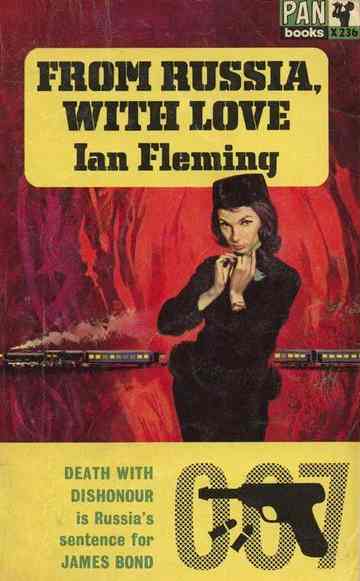
From Russia With Love

For anyone not yet fifty – I doubt you can fully imagine the thrill of a new Bond movie. There are now fifty films in the franchise, the latest being Skyfall (in case you didn’t notice the hype) and I can imagine that the first films might seem like museum pieces to youngsters today. But when I was a teenager the films were quite simply thrilling! And so were the books. 

The first Bond film I saw was From Russia With Love. It was the second film made and it starred Sean Connery. The story centres on a plot by SMERSH the Soviet counter-intelligence agency, to assassinate Bond in such a way as to discredit both him and British Intelligence. As bait for the plot, the Russians use a beautiful cipher clerk and the Spektor, a Soviet decoding machine. Much of the action takes place in Istanbul and on the Orient Express.
The film was released in 1963 and I was fifteen. I saw it with my best friend and his girlfriend, and a girl who wanted to be my girlfriend. But, as I remember it, I wasn’t very keen. It had been snowing and it was cold. I remember wearing my new coat. And I remember the intoxicating smell of the cavernous, art deco Odeon cinema. The film was exciting, moody and, with its seduction scene, quite sexy to a fifteen year old. Innovative too – with its MI5 gadgets. It had all the ingredients for future Bond films.

I loved the books too. From Russia With Love is probably still my favourite. It was the fifth in the series, published in 1957. I can’t remember if it was the first I read – nor if I read it before I saw the film or after. I do remember reading (or re-reading) the whole series when I should have been studying for my exams. Ian Fleming was a very good writer, with pace and an eye for detail.  And modern thriller writers would do well to study his technique.

Writing this has made me hanker to read the book and see the film again. And of course the reason I wrote this piece is that I’ve just seen Skyfall, one of the best Bond films I think, with its nod to its past. You probably had to be over fifty if, when, at the end of the film as the familiar Bond theme music was finally used, you found yourself wiping away a small tear from the corner of your eye.

. . . aNOtHEr dIp INtO ThE mAGpIE mEMOrY pOOoL.

Tuesday, 20 November 2012

Pampered Punctuations from Punctilious Popinjays

:
:
:

"In a time of universal deceit, telling the truth is a revolutionary act."
:
:
:
George Orwell
.
.
.
aNOtHEr qUOtE fRoM ThE mAGpIEs.


Saturday, 10 November 2012

It's Only A Word, Will!

Kyphotic.

Adj. 1. kyphotic - characteristic of or suffering from kyphosis, an abnormality of the vertebral column
unfit - not in good physical or mental condition; out of condition; "fat and very unfit"; "certified as unfit for army service"; "drunk and unfit for service"


.
.
.
aNOtHEr dIp INtO ThE mAGpIE mEMOrY pOOoL.

Sunday, 4 November 2012

A Feast of Posters


A beautifully drawn picture from a poster of the last century. Created at a time when music hall artists were having a rough time of it. I like this period. I like the bawdy type hmour, the working class honesty of the shows but more than that the posters with which  they used to advertise all manner of things...


.
.
.

aNOtHEr dIp INtO ThE mAGpIE mEMOrY pOOoL.

Thursday, 1 November 2012

jbkrost


It says this on jbkrost’s blog profile:

Gender
Male
Location
Introduction
I just stab at the canvas and click at the shutter... sometimes it works out
Interests
Favourite Films
Favourite Music
Favourite Books

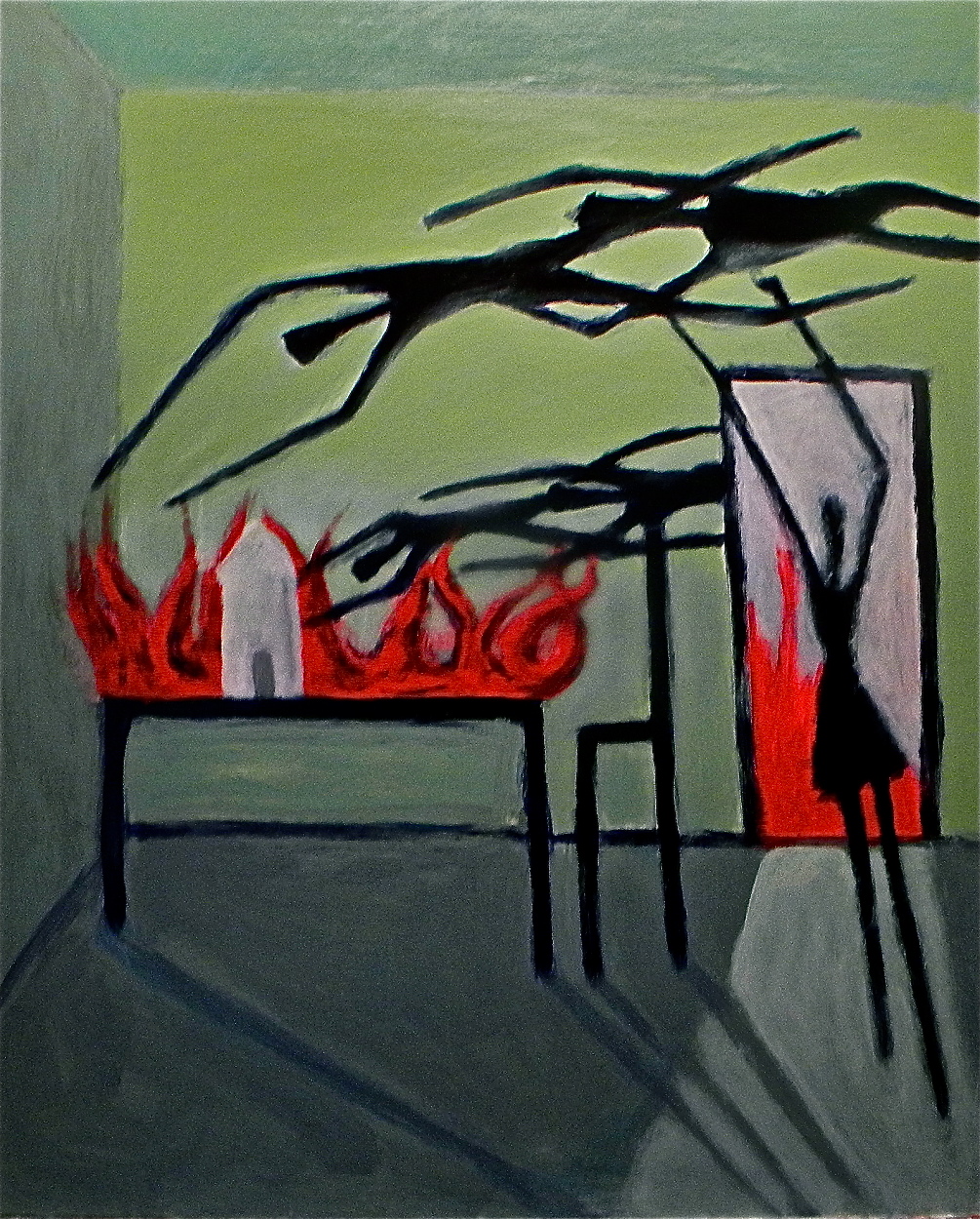
I like the fact that for such an accomplished artist, if known only too few, could be so self-deprecating as to say “I just stab at the canvas and click at the shutter... sometimes it works out.” It does though. It works out incredibly well. Of course in the end it all comes down to taste. I man, after all, everything is a question of personal preference but I have to say that this man’s work is very much ‘up my street,’ my ‘cup of tea.’
He seems, oddly enough, to quite like his anonymity choosing to let his art speak for him rather than adopting a Daliesque type vaudeville. His paintings of stretched, ghost like. His figures remind me slightly of Edvard Munch’s work. Having said that I am sure neither artist would agree. There is pain here, discomfort but I am not sure why. Perhaps, like Francis Bacon, he is merely reflecting the world or humanity as he sees it.

I know this though. I like jbkrost’s (yes, all in lower case) work. I would certainly be proud to have it hang from my wall.


.
.
.
aNOtHEr dOlLoP oF OiL oN lIfeS cAnvAs.

Wednesday, 24 October 2012

Roland Emmett

CARTOONIST AT HOME


Click on the above picture to play film at Pathe News website.

The wonderful eccentric world of Roland Emmett. I first saw his work at the Battersea Pleasure Gardens in 1953- The Far Tottering & Oyster Creek Railway. There is one of his moving sculptural clocks in the mall in Basildon -sadly not working when I last saw it.

Wikipedia says -

"Frederick Rowland Emett (22 October 1906 – 13 November 1990) OBE, his name frequently misspelled as Roland Emmett, was an English cartoonist and constructor of whimsical kinetic sculpture.

Emett was born in New Southgate, London, the son of a businessman and amateur inventor, and the grandson of Queen Victoria's engraver. He was educated at Waverley Grammar School in Birmingham, where he excelled in drawing, caricaturing his teachers and also vehicles and machinery. When he was only fourteen he took out a patent on a gramophone volume control. He studied at Birmingham School of Arts and Crafts and one of his landscapes, Cornish Harbour, was exhibited at the Royal Academy; it is now in the Tate collection.

An otherwise undistinguished career was interrupted by World War II, when he worked as a draughtsman for the Air Ministry, while perfecting his gift for drawing cartoons. From 1939 through the 1940s, he published regularly in Punch – making drawings or watercolours of strange, bumbling trains with silly names. On 12 April 1941 he married Mary Evans, the daughter of a Birmingham silversmith. It was Mary who would manage his business interests. They adopted a daughter, Claire.

In 1947 his cartoons came to life on the stage of the Gobe Theatre, London, in Between the Lines, a scene for Laurier Lister's revue Twopence Coloured, with Max Adrian as an eccentric signalman at Friars Fidgeting Signal Box. In 1951, at the Festival of Britain, his most famous steam locomotive, Nellie, was made into a copper and mahogany kinetic sculpture and was one of the festival’s most popular attractions. There was an unfortunate fatality when the train came off the line. Two of his other trains were created for the Far Tottering and Oyster Creek Branch Railway. At this time he was living in Cornwall and working in a studio in a boat-loft at Polperro; later he would return to West Cornwall before eventually settling for the rest of his life at Ditchling, in Sussex.

Emett parted company with Punch magazine soon after Malcolm Muggeridge became editor and began systematic changes to the magazine. After a spread in Life magazine on 5 July 1954, his work was much in demand in the United States.

He turned more and more to designing and supervising the building of what he called his things – always with silly names such as "The Featherstone-Kite Openwork Basketweave Mark Two Gentleman’s Flying Machine", two copies of which exist, one placed in a glass cage in the Merrion Centre, Leeds). In the mid-1960s he was commissioned by Honeywell to create a mechanical computer, which he named "The Forget-Me-Not Computer." In 1968 he designed the elaborate inventions of Caractacus Potts (played by Dick Van Dyke for the film Chitty Chitty Bang Bang.

In 1973 his water powered musical clock, "The Aqua Horological Tintinnabulator", was installed on the lower floor of the Victoria Centre, Nottingham, UK which can still be seen at work there.

His larger works, such as Emettland, went on extended tours, ending up in prestigious venues such as the Smithsonian Institution in Washington. The Ontario Science Centre in Toronto has a collection of about ten Rowland Emett creations and every December displays the restored working pieces, usually under the title "Dream Machines".

A 30 foot square mosaic by Roland Emett, installed around 1960, can be seen on the side of the NCP car park in The Marlowes, Hemel Hempstead.

His works are fundamentally different from those of Heath Robinson in that they are actually buildable, and would work. The works of the artist Jean Tinguely are a better comparison, "using assemblages of industrial detritus to burlesque effect".[citation needed]

When asked how he came up with his strange designs, Emett remarked:

"It is a well known fact that all inventors get their first ideas on the back of an envelope. I take slight exception to this, I use the front so that I can incorporate the stamp and then the design is already half done."

He was fair-haired and fresh-faced, looked younger than his years, and bore a resemblance to Danny Kaye. In 1978 he was awarded an OBE, and died on 13 November 1990 in a Sussex nursing home."

Saturday, 20 October 2012

Parked-up Quotes from Pork Eyed Cuttlefish

:
:
:
"We do not write because we want to; we write because we have to."
 
W. Somerset Maugham
:
:
:

.
.
. aNOtHEr qUIp fRoM a LegEnDArY lIt. .


Thursday, 20 September 2012

Ponced-up Quotes from Poshed up Pimples

:
:
:
“An English gentleman never shines his shoes, but then nor does a lazy bastard.”
― Will Self
 
:
:
:
.
.
.
aNOtHEr sLIp INtO ThE inSaNItY pOoL.

Wednesday, 12 September 2012

David Caddy

The image below is from the cover of a book  published this time last year, 2011, by Shearsman Books. The publication is a volume of poetry written by David Caddy. The text below the cover artwork is from the publishers website...
 
 
David Caddy is a poet and critic from the Blackmore Vale in north Dorset. He was educated as a literary sociologist at the University of Essex. He founded and organised the East Street Poets, the UK's largest rural poetry group from 1985 to 2001. He directed the legendary Wessex Poetry Festival from 1995 to 2001, and later the Tears in the Fence festival from 2003 to 2005. He has edited the independent and eclectic literary magazine, Tears in the Fence, since 1984. He co-wrote a literary companion to London in 2006, has written and edited drama scripts and podcasts, and regularly contributes essays, articles and reviews to books and journals.

 
An angry young man, growing older but still furious with the way the English countryside is being used, abused and wantonly neglected. Take a walk down your local book shop, Waterstones no doubt, and browse then buy this excellent book.
 
 
.
.
.
yEt aNOtHEr sMArT aRSe IN ThE mAGpIE mEMOrY cOlLeCtiVe.